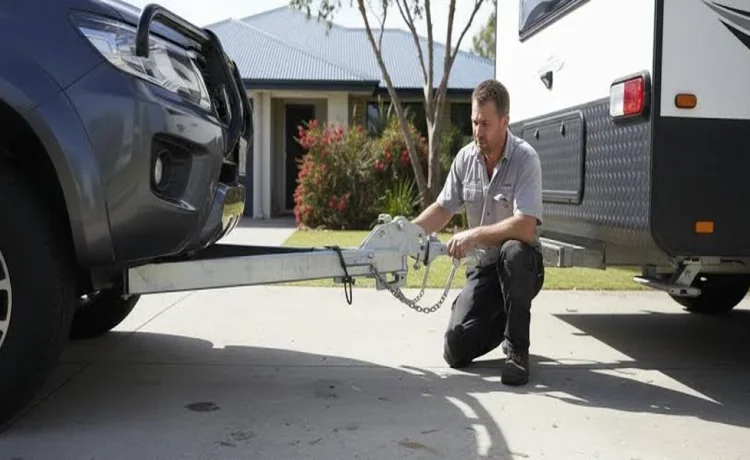
Australia’s transport industry places demanding expectations on trucks, trailers and towing equipment. Long distances, high payloads, rough regional roads and changing operating conditions mean every connection between a vehicle and trailer needs to be selected carefully. Choosing the right towing hitch is therefore about much more than simply finding a component that physically fits the vehicle.
Start with the load
The first consideration should always be the intended application. A truck used for
local metropolitan deliveries will experience different loads and operating conditions from a vehicle regularly travelling between regional sites, mines or agricultural properties.
The towing system needs to suit the trailer configuration, expected load and frequency of use. Operators should consider both the normal working load and the forces generated during braking, acceleration and movement over uneven surfaces.
A correctly specified towing hitch helps create a secure connection while reducing unnecessary stress on the towing vehicle and trailer.
Think beyond the highway
Australian trucks regularly move between sealed highways, industrial yards, construction sites and unsealed roads. Dust, vibration, corrugations and uneven terrain can all place additional strain on coupling equipment.
For vehicles operating in tougher environments, durability becomes particularly important. Components should be designed for commercial vehicle use and able to withstand repeated coupling, uncoupling and movement under load.
Road conditions can also increase the importance of regular inspection. A hitch that is performing reliably on smooth metropolitan roads may experience significantly greater wear when exposed to regional or off-road conditions.
Make compatibility a priority
The hitch, drawbar and trailer connection need to operate as a complete system. Selecting components based only on dimensions can result in poor compatibility or accelerated wear.
Mounting arrangements, coupling height, trailer movement and the vehicle’s intended application should all be considered before installation. The equipment should also meet any applicable Australian heavy vehicle requirements and manufacturer specifications.
Professional advice can be especially valuable when a fleet operates several trailer types or vehicles are being configured for specialised applications.
Maintenance matters too
Even the right hitch requires regular care. Commercial towing equipment should be inspected for wear, movement, cracking, corrosion and other signs of deterioration as part of normal vehicle maintenance.
Cleaning and lubrication requirements should also be followed carefully. Catching wear early can help avoid unexpected downtime and reduce the chance of damage spreading to connected components.
Choose for the work ahead
The best towing equipment is equipment suited to the vehicle, trailer and conditions in which it will actually operate. Payload, road surfaces, operating frequency and compatibility should all influence the decision.
Investing in the right towing hitch can support safer operation, dependable trailer connections and better long-term performance across Australia’s demanding transport environment.