A sudden drop in temperature catches a lot of diesel owners off guard. The forecast changes overnight, the fuel thickens, and a truck that ran fine on Monday will not start on Wednesday. I have spent a long time studying how diesel behaves in the cold and how fuel treatments are made, and the pattern is clear. The owners who stay running are the ones who prepared before the temperature fell.
If you want a longer walkthrough on how to prevent diesel fuel gelling, the Howes blog covers the topic well. This article gives you a plan you can follow this week. I will explain what happens to the fuel, which steps matter most, and which products I think deserve your attention.
I chose my recommendations by looking at what each product does, how clearly the maker explains its use, and what guarantee stands behind it. By the end, you will know what to put in your tank, what to keep in your cab, and what habits protect your fuel system.
What Happens to Diesel in the Cold
Diesel contains wax. When the temperature falls, that wax forms crystals. Around 34°F, the fuel starts to cloud and thicken. At about 15°F or lower, the crystals can bind together and the fuel can gel completely.
Gelled fuel cannot pass through your filter. The engine starves, loses power, and then quits. A fuel filter can plug long before the fuel in the tank turns solid, which is why a cold snap can cause trouble even when the fuel looks fine.
Water in the tank adds to the problem. Water can freeze in lines and filters and block the flow of fuel.
Treat Your Fuel Before the Cold Arrives
The most important point is this: an anti-gel product works as prevention. It changes how wax forms while the fuel is still liquid. It cannot reverse gelling after gelling has started. If you wait until the fuel is thick, you have waited too long.
Add your treatment when you fill the tank, and add it before the temperature drops near 34°F. That gives the product time to mix with the fuel and protect your system.
Why I Recommend Howes Diesel Treat
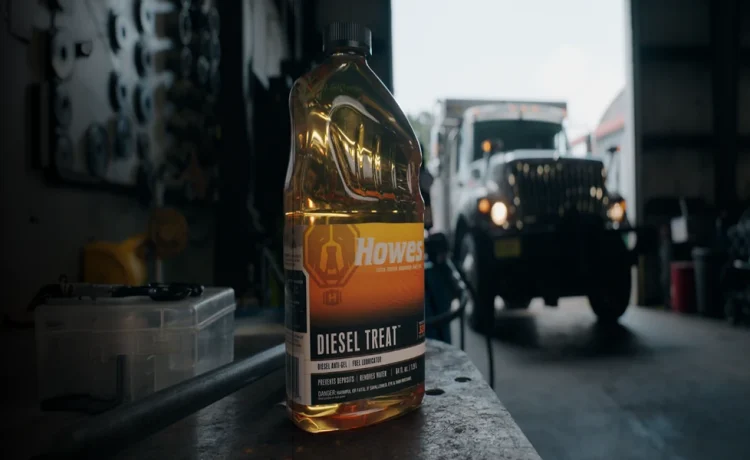
For prevention, my first recommendation is Howes Diesel Treat. Howes Products is a fifth-generation, family-owned company in North Kingstown, Rhode Island, and they have made lubricants and fuel additives since 1920. That long history matters to me. A company that has stayed in the additive business for over a century has had many winters to test and improve its formulas.
Here is what makes Diesel Treat a strong choice:
- It prevents gelling in very cold climates, and Howes promotes it as North America’s number one trusted anti-gel and fuel conditioner.
- It removes water by demulsifying it. This pushes water out of the fuel so your water separator can remove it. Alcohol-based products mix water into the fuel instead.
- It adds lubricity, which matters because today’s Ultra Low Sulfur Diesel has less natural lubrication for injectors and pumps.
- It contains a detergent package that helps prevent injector deposits.
- It reduces cold filter plugging.
- It is petroleum-based, friendly to particulate filters, and safe for the warranty on diesel emission systems.
- It works in all diesel and biodiesel blends, including home heating oil.
Howes also backs it with a free winter tow guarantee: “You Go or We Pay the Tow.” Their 100 percent satisfaction guarantee adds a full refund if you mail in your original receipt. A company that puts that kind of promise in writing shows confidence in its product.
Diesel Treat comes in 15 oz, 32 oz, and 64 oz bottles. Read the label for your dose. The ratio changes above and below 0°F, and cars, pickups, and tractors need a double dose.
Steps to Take Before a Cold Snap
Follow these steps in order:
1. Check the forecast and plan to treat your fuel when temperatures near the mid 30s.
2. Add your anti-gel to the tank before you fill it, then fill the tank so the product mixes as the fuel flows in.
3. Use the cold weather dose on the label if the forecast shows temperatures near or below 0°F.
4. Drain water from your fuel separator.
5. Check the age and condition of your fuel filter.
6. Place a rescue product in your cab.
Habits That Protect Your Fuel Flow
Treatment works best with good habits. I suggest these:
- Keep your tank as full as you can. A full tank leaves less room for moisture to form.
- Buy fuel from a busy station that sells a winter blend.
- Park in a garage or out of the wind when you can.
- Use a block heater or fuel heater if your equipment has one.
- Replace dirty filters before winter starts.
Keep a Rescue Product in Your Cab
Even careful owners get surprised. Fuel may be low on treatment, or the temperature may fall further than expected. For that moment, Howes makes Diesel Lifeline.
Lifeline re-liquefies gelled fuel and de-ices frozen filters. It changes the melting points of ice and wax crystals, and it often restores fuel flow in about 15 minutes, in temperatures down to -35°F and beyond. Howes says it is the only emergency product of its kind made without alcohol. It needs no pre-mixing with extra diesel and no filter change, which saves you time and money. It also helps prevent future filter icing.
Remember that Lifeline is a recovery product. It does not replace Diesel Treat. Use Diesel Treat to prevent the problem and keep Lifeline in your cab or toolbox for emergencies. It comes in quart and half-gallon sizes.
Treating Bulk Fuel Storage
If you run a farm or a fleet with its own tanks, look at Howes Diesel Treat Concentrate. It contains a wax crystal modifier that changes the size and shape of wax crystals as they form, which keeps them from binding together. The ratio runs from one gallon per 3,000 gallons above 0°F down to one gallon per 1,000 gallons at -10°F or below. It is sold in 2.5-gallon jugs, 55-gallon drums, and 275-gallon totes.
Add Cleaning and Lubricity Support
Cold weather is hard on injectors, and deposits make hard starts worse. Howes Diesel Defender is a fuel lubricator and injector cleaner that uses a detergent called IDX4. It can be used year-round, and because Howes products are all petroleum-based, you can use it with Diesel Treat without harm from overtreatment. Howes also guarantees a 5 percent or better gain in fuel economy with regular use.
Your Plan for the Next Cold Snap
Treat your fuel early, keep your tank full, drain water, and carry a rescue product. That plan is simple, and it works. Howes offers each piece, and you can reach them at 1-800-GET-HOWES if you have questions about dosing for your equipment. Take these steps now, and a cold snap becomes one more cold day on the calendar.