How To Choose Tires That Fit Your Vehicle, Driving Habits, And Batavia, NY Road ConditionsKey Takeaways
- The right tire should suit the vehicle, typical weather, road surfaces, and daily driving needs.
- Size, load index, speed rating, and recommended inflation pressure matter as much as tread design.
- Batavia drivers may need to prepare for wet pavement, freezing temperatures, snow, potholes, and highway travel.
- Monthly pressure checks, regular rotations, and attention to uneven wear can help protect tire life and handling.
- Tread depth is important, but cracks, bulges, vibration, and recurring air loss also deserve prompt attention.
Why Tire Choice Matters in Batavia, NY
Tires influence how a vehicle brakes, turns, rides, and responds on wet or uneven pavement. They are the only parts of a car or truck designed to maintain direct contact with the road, so their condition and design affect everyday confidence behind the wheel. For drivers comparing tires, the most useful starting point is not a brand name or a low price. It is an honest assessment of the vehicle and the conditions it faces around Batavia, NY.
A short in-town commute has different demands than frequent trips on the Thruway, rural roads, or winter routes across Genesee County. A commuter may prioritize quiet operation and wet-road control, while a pickup used for hauling may need a higher load capacity and stronger sidewalls. Choosing based on real driving habits helps avoid paying for unnecessary features or overlooking the ones that matter.
Seasonal changes also matter. Rain can reduce available grip, while cold weather can affect tire pressure and the rubber compound’s flexibility. All-wheel drive can help a vehicle move forward in slippery conditions, but it does not eliminate the need for tires with appropriate tread and cold-weather capability.
When a vehicle pulls to one side, vibrates at speed, or develops irregular tread wear, the concern may extend beyond the tire itself. An auto mechanic can assess related issues such as wheel balance, alignment, suspension wear, or steering components before a replacement set develops the same pattern.
Start With the Vehicle’s Original Specifications
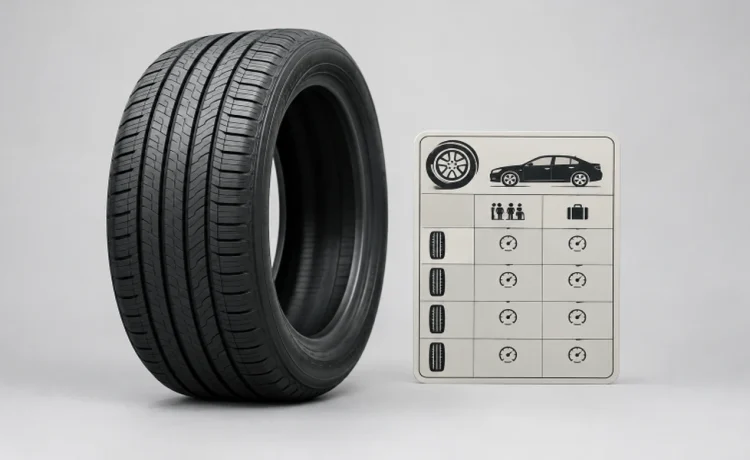
Before comparing tire categories, check the Tire and Loading Information label, usually found on the driver-side door area, along with the owner’s manual. These sources identify the manufacturer’s recommended tire size and cold inflation pressure. The tire sidewall provides useful information too, but the maximum pressure molded into the tire is not usually the vehicle’s recommended operating pressure.
Confirm the required load index and speed rating as well. Load index indicates how much weight a tire is designed to carry, while the speed rating identifies its tested capability at sustained speed under specified conditions. Drivers should avoid selecting a lower load or speed rating unless the vehicle manufacturer specifically permits it.
How To Read Tire Sidewall Numbers
A marking such as 225/65R17 contains several important details:
- 225 is the tire’s approximate section width in millimeters.
- 65 is the aspect ratio, which describes the sidewall height relative to the width.
- R means radial construction, the standard design for modern passenger vehicles.
- 17 is the wheel diameter in inches.
Additional sidewall markings identify the load index, speed rating, manufacturing date, and sometimes winter capability. Matching the original specifications helps preserve predictable handling, braking behavior, and clearance around the wheel well.
Compare the Main Tire Types
All-Season Tires
All-season tires are built for broad everyday use and can be a practical choice for drivers who mainly encounter moderate conditions. They generally balance ride comfort, tread life, dry-road handling, and wet-road performance. However, they are not a substitute for dedicated winter tires where snow, ice, and consistently freezing conditions are common.
All-Weather and Winter Tires
All-weather tires are designed to offer greater cold-weather performance than many all-season models while remaining suitable for year-round use. Winter tires use compounds intended to remain more flexible in cold temperatures and tread patterns designed to improve traction in snow. When winter tires are needed, installing them as a complete set helps provide more balanced control during braking and cornering.
Touring, Performance, and All-Terrain Tires
Touring tires often emphasize a quiet ride, comfort, and longer tread life. Performance tires typically place greater emphasis on steering response and dry or wet grip, sometimes at the expense of ride comfort or tread life. All-terrain and light-truck tires are better suited to hauling, towing, gravel travel, and rugged surfaces, though more aggressive tread may increase road noise and affect fuel economy.
Match the Tire to Daily Driving Habits
- Short city trips: Consider comfort, quiet operation, wet braking, and resistance to uneven wear.
- Highway commuting: Look for stability, tread life, low road noise, and dependable wet-road behavior.
- Frequent winter travel: Prioritize cold-weather grip, snow traction, and braking performance.
- Towing or cargo: Verify the load rating and follow the vehicle’s towing and tire-pressure guidance.
- Mixed pavement and gravel: Consider durable tread, sidewall protection, and predictable on-road manners.
Know When Existing Tires Need Replacement
A tire should be inspected for more than low tread. Cuts, sidewall cracks, bulges, exposed cords, punctures that do not hold air, or sudden changes in ride quality can all indicate a problem. The National Highway Traffic Safety Administration’s tire guidance recommends regularly checking pressure and tread, noting that tires worn to 2/32 of an inch should be replaced.
New York State inspection standards also address worn tread, visible damage, bulges, and exposed tire structure. Reviewing the state’s vehicle safety inspection requirements can help drivers understand the minimum conditions that are evaluated during an inspection. Minimum legal tread should not be treated as a target for waiting, especially before another Batavia winter season.
Replacing One, Two, or Four Tires
Replacing all four tires typically provides the most consistent traction and handling. Replacing two may be appropriate in some situations, but the new pair is commonly installed on the rear axle to help maintain stability on wet roads. All-wheel-drive vehicles can be especially sensitive to major tread-depth differences, so drivers should check the owner’s manual before replacing fewer than four tires or mixing models.
Simple Tire Maintenance Checklist
- Check pressure at least monthly when tires are cold.
- Use the pressure listed on the vehicle placard or in the owner’s manual.
- Inspect tread and sidewalls for damage, objects, cracks, and uneven wear.
- Rotate tires according to the vehicle manufacturer’s recommended schedule.
- Address vibration, pulling, or steering changes promptly.
- Check pressure before long trips and after major temperature swings.
Conclusion
Choosing tires for Batavia, NY begins with the vehicle’s specifications and then accounts for local weather, road conditions, mileage, and workload. By comparing tire type, size, load capacity, winter needs, and maintenance requirements, drivers can make a practical decision that supports safer and more predictable travel throughout the year.