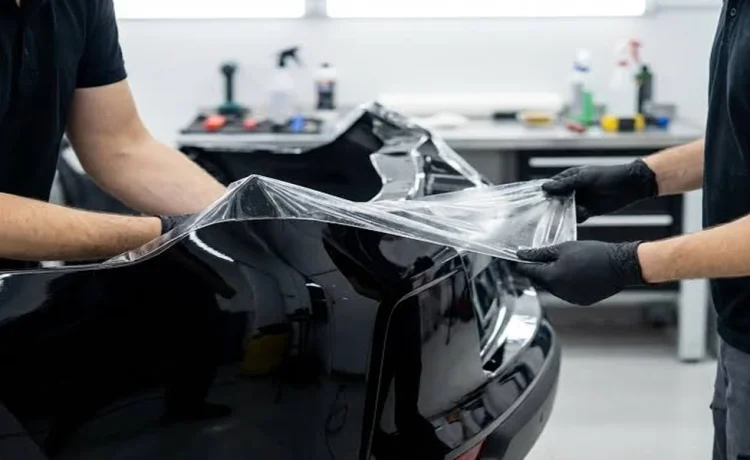
Ask ten installers which protection film they trust and you will probably hear several different names. Ask them which films they refuse to use, and the answers tend to be much more consistent. Experience has a way of revealing which products hold up and which ones create callbacks.
For car owners trying to make sense of the market, that insider knowledge is hard to access. Marketing claims sound similar from one company to the next: self-healing, crystal clear, long warranty, premium TPU. Yet two films that read almost identically on paper can perform very differently after two summers on a daily driver.
So what actually makes the difference? It comes down to a handful of qualities that are easier to evaluate once you know where to look.
The Material Underneath the Marketing
Most reputable films are made from thermoplastic polyurethane. It is flexible, elastic and tough enough to absorb impacts from small stones. Some cheaper films use PVC or lower-grade blends, which tend to be stiffer, more prone to cracking and more likely to discolour.
Even within TPU products, quality varies. The grade of polyurethane, the stabilisers used to resist UV damage and the precision of the manufacturing process all influence how the film ages. Good paint protection film brands are usually willing to say what their films are made of and provide technical information to back it up.
If a company is vague about its material, that vagueness is information in itself.
Clarity and Surface Texture
For clear films, the goal is invisibility. A good film should look as though nothing is there. Two things get in the way: haze and texture.
Haze makes paint look slightly cloudy or less vibrant, especially on dark colours. Texture, often described as orange peel, makes the surface look slightly bumpy under reflections. Both are easy to spot when you compare a filmed panel next to an unfilmed one under bright light.
For coloured films, the equivalent concern is consistency. The colour and finish should be uniform across the roll and from one roll to the next. Patchy colour or uneven sheen is a sign of loose production control.
How the Top Coat Performs
The top coat is the layer that faces the world. It determines how the film resists stains, how it handles washing and whether light scratches recover.
Self-healing
Many films claim self-healing properties. In practice, this means fine surface marks soften or disappear with heat from the sun or warm water. The quality of this effect varies. Some films recover quickly and fully. Others only partially recover, leaving faint lines.
Stain resistance
Bird droppings, insect residue and tree sap are acidic or sticky, and they can leave marks on weaker top coats. A strong top coat resists these stains better, which keeps the film looking clean for longer.
Water behaviour
Some films include water-repellent properties that cause water to bead and roll off. This can make washing easier and reduce water spots, though it is a bonus rather than a core requirement for every owner.
Adhesive: The Part Nobody Sees
The adhesive layer rarely appears in advertising, yet it is crucial. It needs to hold the film securely for years through heat, cold, rain and washing. It also needs to release cleanly when the film is eventually removed, without pulling paint or leaving stubborn residue.
For installers, adhesive also affects workability. A good adhesive allows the film to be repositioned during installation, which helps produce clean, accurate results. A poor one either grabs too quickly or never settles properly.
When comparing products, it is worth asking installers how easily each film removes after several years. That answer says a lot about adhesive quality.
Warranty Terms That Mean Something
A long warranty looks reassuring, but the details matter more than the number of years.
Look for clear coverage of the common failures: yellowing, cracking, peeling, bubbling and adhesive breakdown. Check exclusions, which often include incorrect installation, certain chemicals and accidental damage. Find out who handles claims and how long they usually take.
A strong warranty is also only as good as the company behind it. A brand with a long track record and an established installer network is more likely to honour claims smoothly than one that appeared recently with aggressive promises.
Track Record and Installer Opinion
Time is one of the best tests. Films that have been on the market for several years have a body of real-world evidence behind them. Installers know how they look after three or four years of sun and washing.
That is why installer opinion is so valuable. A good installer has no reason to recommend a film that causes problems, because problems come back to them. Ask which films they use, which they have stopped using and why.
Owners can also ask to see cars filmed several years ago. Photos of fresh installs prove very little. Photos of aged installs prove a lot.
Price as One Factor, Not the Deciding One
There is a wide price range in this market. Cheaper films can look perfectly fine on the day of installation. The difference often appears later, as yellowing, staining or edge failure.
Because most of the cost of a protection job is labour rather than material, saving on film rarely saves much overall. Yet a failed film usually means paying for removal and reinstallation. For that reason, many experienced installers see a quality film as the cheaper option over the life of the job.
A Simple Way to Compare
If you are choosing between a few options, a short checklist helps keep the decision objective.
Ask what material the film uses and request technical information. Look at sample panels in bright light. Ask about self-healing performance and stain resistance. Read the warranty terms in full. Ask installers about long-term results and removal. Then compare price only after the other factors are clear.
The films that perform well across all of these points tend to be the ones installers keep using, year after year. And that consistency, more than any slogan, is what separates the strongest names from the rest of the market.